fbpx
Bartra Wealth Advisors have a limited number of final Irish Immigrant Investor Programme (IIP) approved investment slots available, with a restricted quota and timeframe. These slots are open to clients who have an immediate intention to apply for the IIP. Contact us now to secure your opportunity.

(Part 2) Brexit and beyond: 8 things to know about the future of the UK and Europe

In our previous article, we discussed four important things to be aware of post-Brexit. But the UK-EU deal presents opportunities, too.

From 1980 to 2020, Europe’s five largest economies have consistently been France, Germany, Italy, Spain and the UK. However, as COVID-19 has raged through Europe and the UK has departed from the European Union, many EU nations are facing deep recessions, with the economy of the EU forecast to contract by a record 7.4% in 2020.

Meanwhile, Ireland’s star has been rising. Ireland remains a strong and committed member of the EU post-Brexit. Politically, it is taking its place among the nations of the world. On a per-head basis, Ireland has a good claim to be the world’s most diplomatically powerful country. In July 2020, the 19 finance ministers of the eurozone elected Irish finance minister Paschal Donohoe to be the president of their influential Eurogroup, putting Ireland in a powerful position as the EU debates ways to deal with the economic fallout of the global pandemic. In October, the EU appointed Ireland’s Mairead McGuinness as the new commissioner in charge of financial services. Ireland also won a place on the UN Security Council, securing one of the ten rotating seats to join the five permanent members that include the US, UK, Russia, France and China.

Economically, Ireland remains a popular choice for investors looking to access the European market. With a low corporate tax rate of 12.5% (among the lowest in Europe) and favourable tax system, Ireland is a highly sought-after location for foreign investment and businesses. While the Global Financial Crisis caused a contraction in Ireland’s economy, which had been flourishing for the decade prior, it has regained its stability and for the past six years has been one of the strongest developed countries in Europe. And in terms of quality of life, Ireland ranked joint second with Switzerland, beating Sweden, Germany and the UK.

With a Brexit deal now agreed between the UK and the EU, Ireland appears to be the land of opportunity, particularly when it comes to global competitiveness. Here are four important elements to consider:

1. Business and employment

The Irish Government has continued to demonstrate its commitment to Foreign Direct Investment (FDI) by establishing a business environment that is conducive to FDI activity and Ireland remains a location of choice for many of the world’s leading companies. Indeed, more than 1,100 companies, including many of the world’s leading brands, have decided to place Ireland at the hub of their European operations. Additionally, 70 individual investments related to Brexit, with more than 5,000 associated jobs, have been approved since the UK’s EU referendum in June 2016, according to Ireland’s Foreign Investment Agency, IDA Ireland’s 2019 figures.
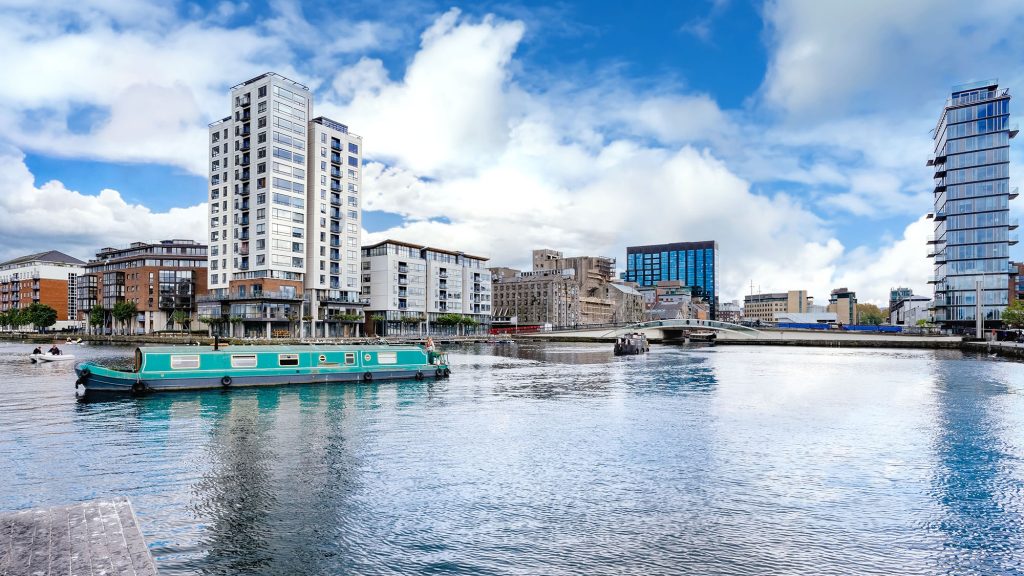
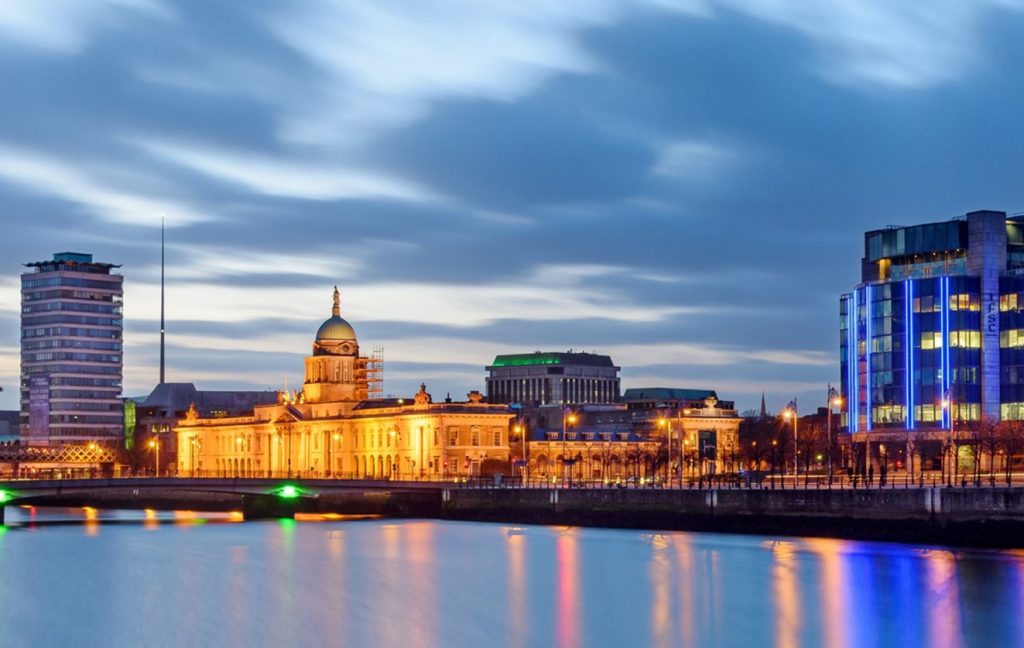
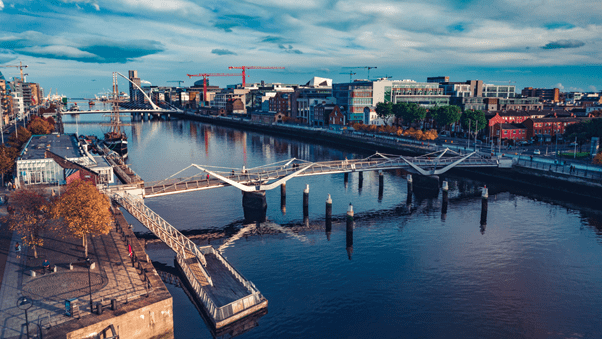
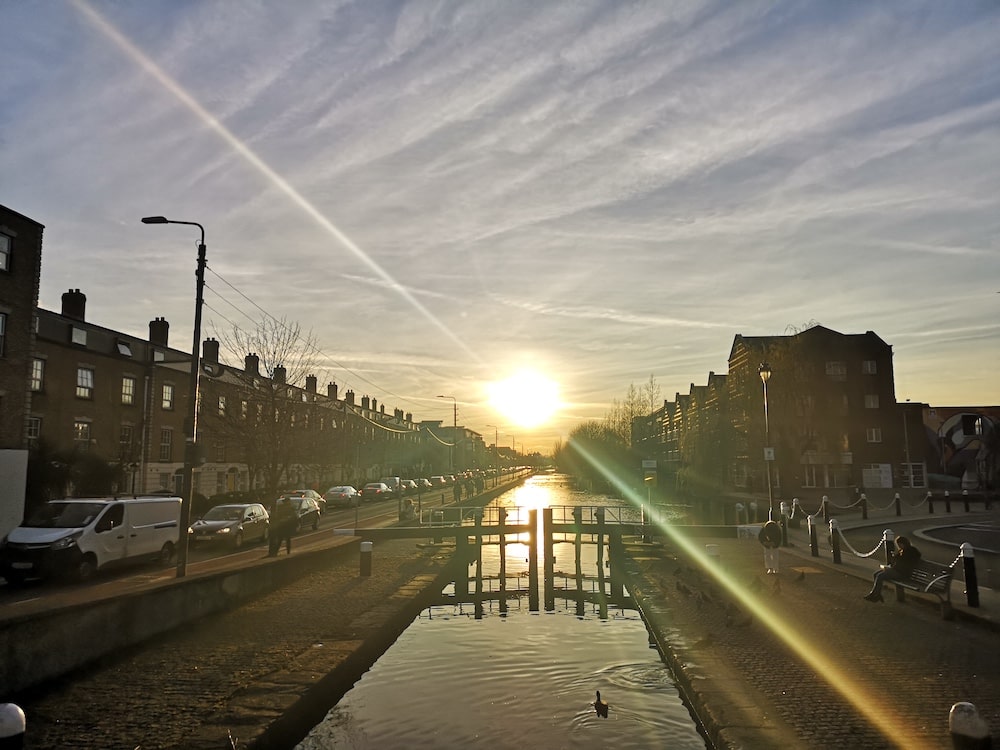
Dublin Docklands

Cityscape of Dublin Docklands and river Liffey with modern buildings and barge on river. To date companies that have announced investments in Ireland connected to Brexit include Barclays, Morgan Stanley, TD Securities, Wasdell, Delphi/Aptiv, Simmons & Simmons, S&P Global, Thomson Reuters, Equilend and Coinbase. And Dublin remains the most popular destination for financial services firms to relocate to post-Brexit according to EY’s Brexit Tracker.

Besides the financial sector, Ireland is home to 9 of the top 10 global pharmaceutical companies, including Pfizer, Johnson & Johnson, Roche and Novartis. It is also the base for many US Tech titans; IBM was the first US tech firm to set up in Ireland in 1956, with Google, Microsoft, Intel, Apple and Facebook moving in more recently. Last year, Apple celebrated 40 years of continued investment and reinvestment in Cork.

“For US companies with ambitions to be global players, Ireland is a natural fit for their international operations,” said Martin Shanahan, CEO of IDA Ireland. According to IDA, 245,096 people were directly employed in the multinational sector in Ireland in 2019, representing about 10% of the Irish labour force.

Although the US remains Ireland’s largest overseas investor, investments into Ireland from China have surged in recent years. According to the Rhodium Group, FDI from China into Europe declined in 2019, but the opposite was true for Ireland. Figures from Baker McKenzie show that investment from Chinese companies rose 56% in 2019 through various M&A deals and expansions, meaning the world’s second-largest economy is becoming increasingly important to Ireland. Among these, Huawei announced a €70 million ($76.7 million) investment into research and development in Ireland in 2019, while in 2020 TikTok announced its plans to build €420 million ($500 million) data centre in Ireland.

The presence of foreign/international companies helps to create strong job markets which are crucial to immigrants. With more job opportunities in professional sectors, immigrants and any graduate children do not have to sacrifice their professional career and remuneration. With an increasing number of multinational firms, this could see the country open up.

2. Favourable market environment

The EU’s Single Market environment, together with the adoption of the Euro and support from the combined power of 27 Member States, have strengthened the Irish economy and allowed it to flourish. Ireland is now a nation with a modern economy based on free trade, foreign investment and growth.

It also has one of the most favourable tax regimes in the world, attracting hundreds of foreign companies. This is strengthened by the government’s long term commitment to its 12.5% corporate tax rate.
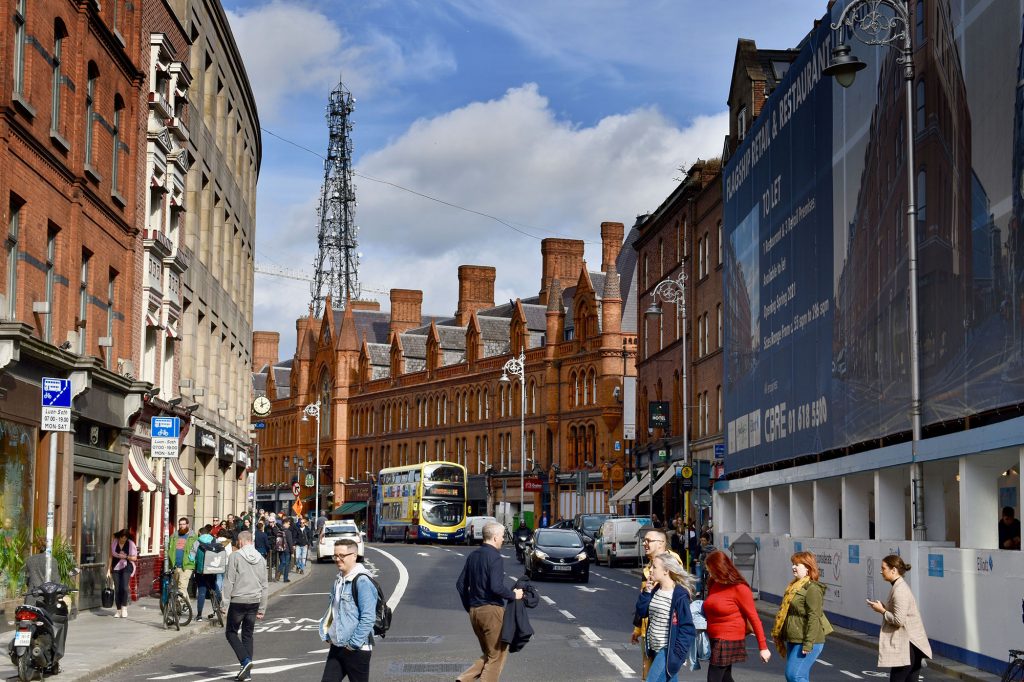
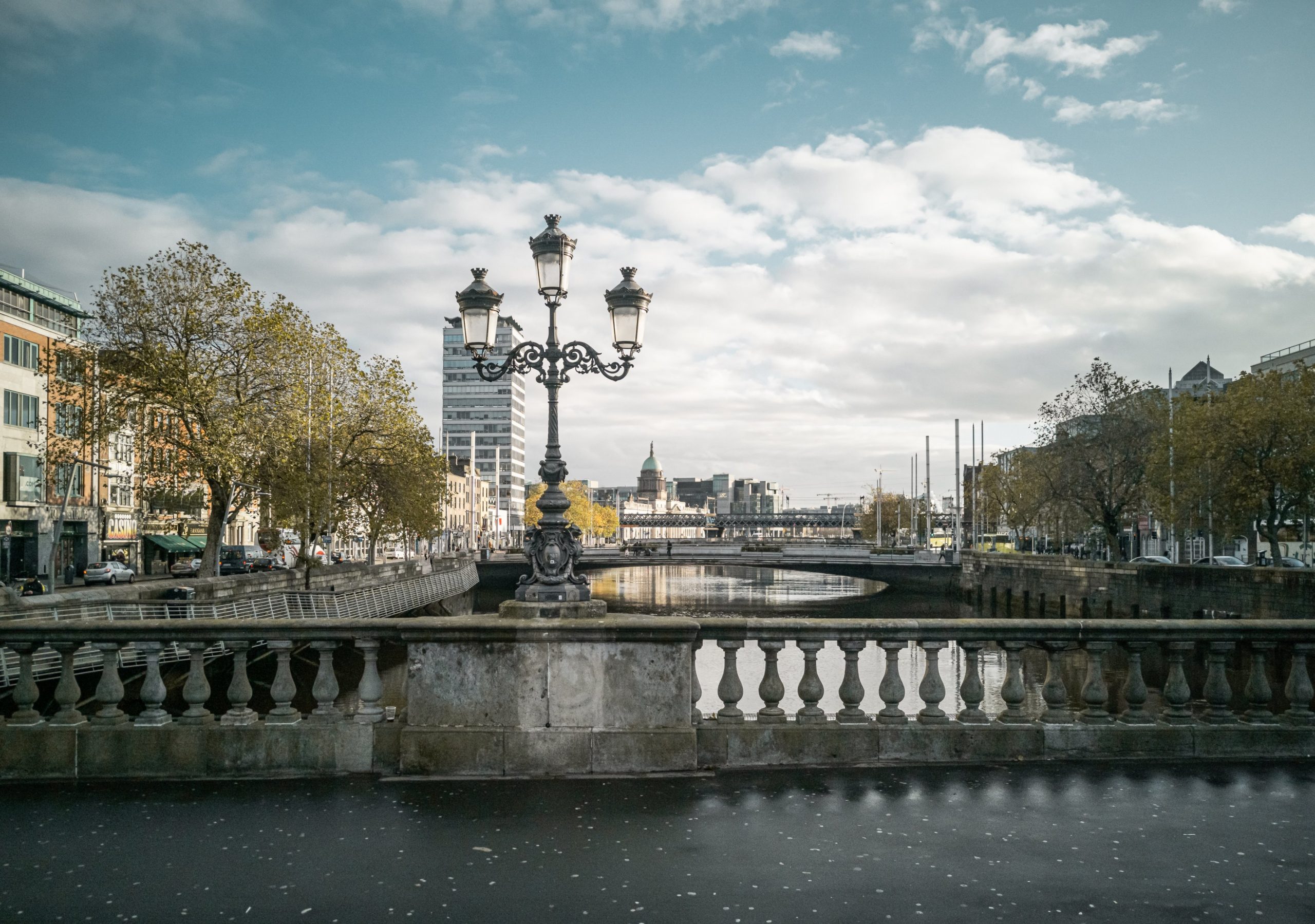
Dublin Ireland-October 2019

Language is vital for communication. And English is now the global language of business as well as being spoken at a useful level by some 1.75 billion people worldwide – or one in four people. Multinational companies are increasingly mandating English as the common corporate language. For two decades, English has been the ‘lingua franca’ of EU institutions in Brussels, used by EU policymakers to communicate about laws regulating subjects like energy, security and trade. After Brexit, Ireland will be the only Member State where English is spoken as its first language.

Ireland may have EU membership, a favourable tax system and a global first language, but it’s keen to offer more to boost its growth and productivity. The nation is currently updating its rules around private funds to encourage more alternative investment managers to use the country as a base for their European operations. The rules have been designed to appeal to private fund managers based in the UK who will lose the “passporting” rights that have allowed them to sell investment products across the EU pre- Brexit. Ireland is already Europe’s second-largest fund centre with more than 560 international managers using the country as a domicile from where they can sell their products across Europe and Asia, and this will only increase its appeal. Managers that establish Irish investment limited partnerships will be granted more flexibility when establishing private equity, private credit, venture capital, infrastructure, renewable energy and real estate funds under legislation which was approved in December 2020 in the Dáil, the Irish parliament. The reforms are expected to create several thousand jobs and new income streams for service providers. Currently, more than 16,000 staff are directly employed in Ireland’s fund industry including portfolio managers, administrators, trustees, auditors, compliance, legal and tax advisers.

3. Freedom of movement – UK and EU

Ireland remains a vital member of the EU and continues to benefit from the union’s economic and political stability. As EU citizens, Irish nationals can continue to live and work freely in any EU Member State and Irish citizens continue to enjoy other privileges, such as access to the European Health Insurance Card that provides them with healthcare while traveling throughout the EU. Students belonging to Irish institutions have access to the Erasmus+ programme and the right to study in the EU. Other perks for Irish nationals include waived mobile phone roaming charges when traveling within the EU.

Ireland will be the only bridgehead into both the EU and the UK following Brexit. The Common Travel Area (CTA) is a long-standing arrangement between the UK, the British Crown Dependencies (Jersey, Guernsey and the Isle of Man) and Ireland that pre-dates both British and Irish membership of the EU and is not dependent on it. Under the CTA, British and Irish citizens can move freely and reside in either jurisdiction and enjoy associated rights and privileges, including the right to work, study and vote in certain elections, as well as to access social welfare benefits and health services.

Thanks to its strategic relationships with the EU and the UK, and the freedom of movement that these provide, many international companies see Ireland as an important gateway to both the UK and Europe.

4. The popularity of Irish residency and citizenship

As Brexit sees the UK and EU go their separate ways, EU nationals residing in the UK must now apply for settlement, while UK citizens residing in the EU must follow suit and obtain resident permits. But there’s an exception – the Irish. And for this reason, Irish residency and citizenship are becoming increasingly attractive.
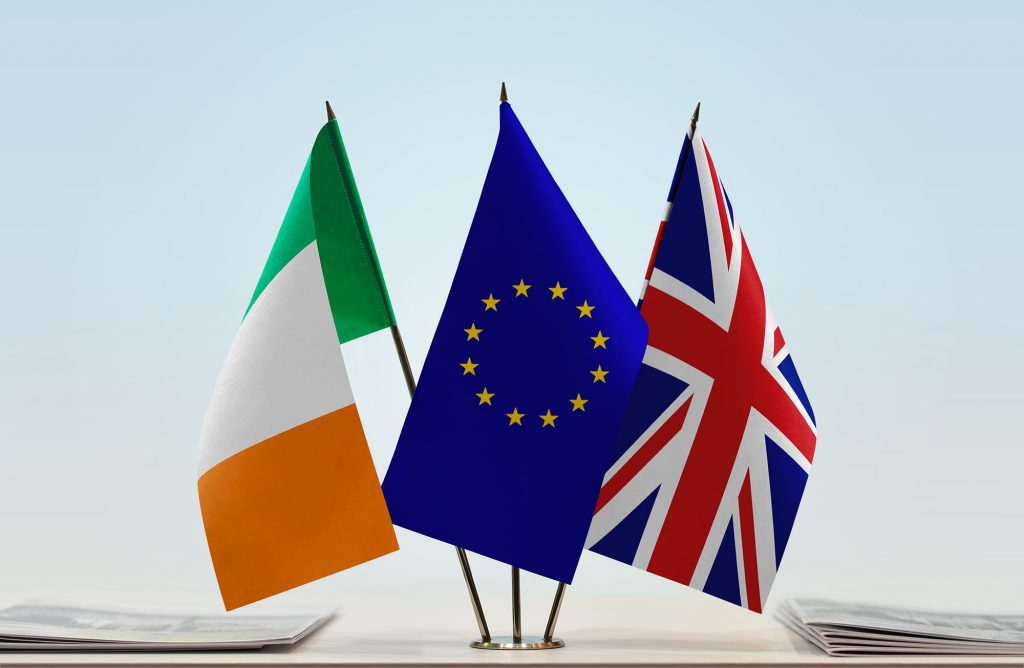
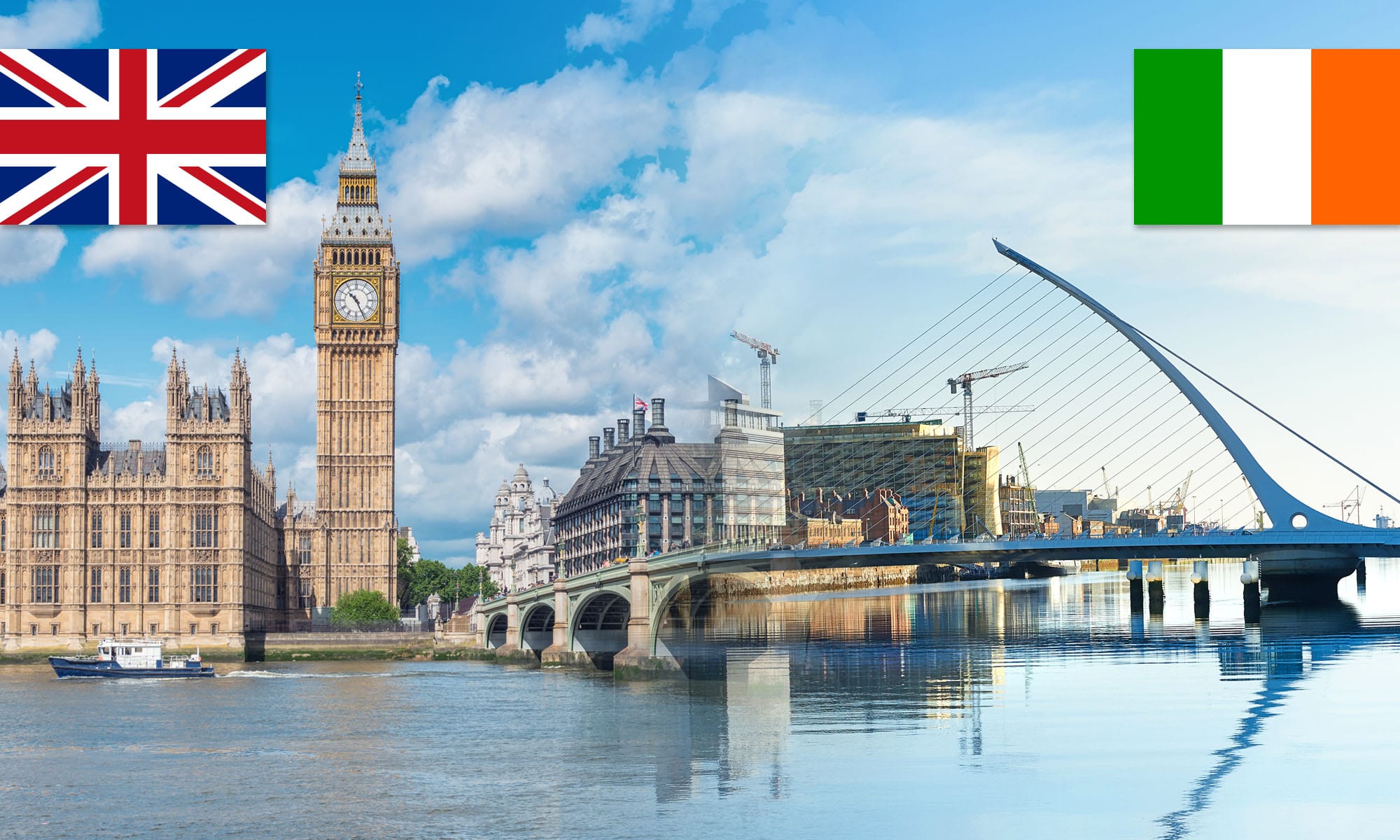
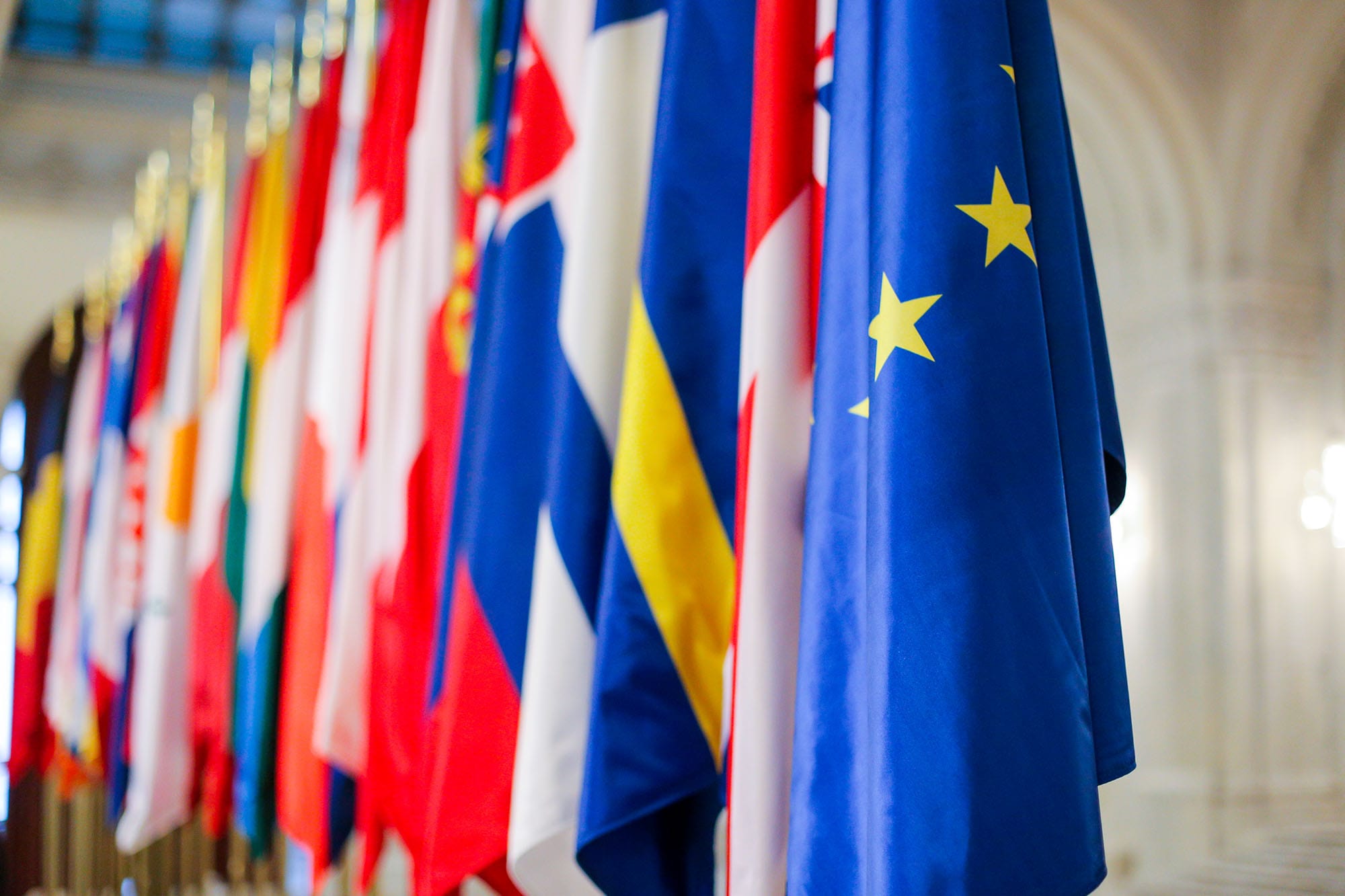
Flags of Ireland and United Kingdom with a EU flag

In particular, the Irish Investment Migration Programme is gaining popularity among wealthy individuals, not just because of its links to the EU and UK, but also due to its safety and simplicity. Compared to other Golden Visa programmes in Europe, the Irish Investor Immigrant Programme (IIP) outshines its peers. When investing in enterprises under the IIP’s investment options, the required holding period of 3 years is low compared to other European investment migration options (Greece, for example, requires an indefinite holding period), while the exit strategy is simple and straightforward without the need to liquidate investments; you simply get your money back. The IIP also only requires investment after approval, and unlike in other countries where the investment is required in real estate, investments in the IIP are hassle-free when it comes to exiting with no need for property management firms to rent out properties for ROI, nor the need for brokers to find buyers once the holding period is over. IIP makes the Irish immigration process simple, clean and efficient. To find out more, read about the Irish Investment Migration Programme on IMI.

Obtaining Irish residency in the most durable bridge between two of the strongest economies in the world, the EU and the UK, following Brexit, and is undoubtedly a wise move for international investors. This is something which the IIP sets the stage for in 2021. And we believe that interest in the IIP will only increase as businesses and affluent individuals recognise the personal and professional advantages of maintaining a foothold in Europe, and foresee strong demand from China, Hong Kong, Vietnam, India and the UAE, as well as interest from South Africa, Canada and the UK.

To find out more about our IIP, please do not hesitate to get in touch. Missed Brexit and beyond Part 1? Click here to read.

 

(Part 1) Brexit and beyond: 8 things to know about the future of the UK and Europe

The UK and the European Union (EU) finally agreed a deal on Christmas Eve that will define their future relationship. It replaces the partnership they have shared for the last 47 years. But will this take Brexit off the front pages or stop Brits talking about it? Or has the real Brexit battle only just begun? We have put together a summary of Brexit-related information to help you gain a better understanding of what the future holds for the UK and Europe.

What do we know about the deal?

The 1,246-page trade agreement has detailed provisions on many issues and contains new rules for how the UK and EU will live, work and trade together. Importantly, it means no tariffs or quotas will be introduced. However, while the deal came into force on 1 January, with everything left so late many people and businesses have not had much time to prepare for the changes.

There are four key things to be aware of:

1. Economy

The British government’s own fiscal watchdog, the Office for Budget Responsibility (OBR), has said that the deal will dampen long-term GDP by 4%, meaning Brexit is projected to do more economic damage to Britain than COVID-19. The deal is also seen as a ‘thin’ deal, which means it leaves many unresolved issues to be dealt with in later negotiations.

Yes, the UK has avoided tariffs on trade, but there will now be other complexities and mountains of paperwork. The UK benefited from access to more than 20 EU systems, which do everything from track the movements of goods and vehicles to store risk profiles for goods and producers from around the world, with the UK sharing its own data as part of this. But after Brexit, although tariffs for goods will be dropped, more friction may ensue as a result of other trade barriers, such as the administrative burden on traders, complicated border processes, and limited information sharing between customs authorities. Additionally, the new import and export declarations alone are likely to cost UK companies £7.5 billion ($10.3 billion) annually, according to HM Revenue & Customs.

Unemployment will also be a challenge post-Brexit. Since the June 2016 referendum, the job market has been contracting, with many companies leaving the UK, downsizing or cutting jobs. For example, in the financial services sector, Aviva, Britain’s second-largest insurer, stated that it would move £7.8 billion worth of assets to Ireland, while Bank of America Merrill Lynch (BAML) announced a merger between its UK and Irish subsidiaries, transferring 125 jobs to Dublin, which remains BAML’s European headquarters. Additionally, British bank Barclays is transferring £166bn of its clients’ assets to the Irish capital, while Credit Suisse plans to move about 250 bankers from London to other European financial hubs. According to EY, £1.2 trillion ($1.6 trillion) of assets, along with around 7,500 employees, have been transferred out of the UK to the EU, including to Dublin, Luxembourg, Frankfurt and Paris by financial services firms.

Job UK

UK unemployment is forecast to reach 2.6 million by mid-2021, according to the government’s economic watchdog, which represents 7.5% of the working-age population. This will compound the impact of the COVID-19 pandemic, which has resulted in nearly 300,000 jobs lost in the hospitality sector since February 2020. In addition, retail has shed 160,000 jobs as non-essential shops have been forced to shut, and culture has seen 89,000 jobs go. And those figures are only for staff on company payrolls; thousands more casual workers and freelancers have been affected too. It seems unlikely that the UK’s economy will rebound quickly.

2. End of free movement

UK citizens and residents will no longer have the right to work, live, study or start a business in the EU without a visa, though short stays will be allowed (visa waivers will apply). This doesn’t help those seeking to travel frequently and do business in the EU. Comparing market capacity, the UK’s population is about 66.4 million, but the European Union’s, excluding the UK, is six times larger, which may lead to unfavourable business opportunities.

COVID-19 has also movement less free. The UK is Europe’s worst-hit country, with more than 40 countries banning UK arrivals in December 2020. There were hundreds of passengers at London’s Heathrow Airport scrambling onto the last flight to Dublin minutes before a travel ban set in at midnight on 20 December to nations across Europe. Tighter measures may apply with prolonged quarantine and pre-departure PCR tests likely required even when the situation begins to ease.

3. Education

Students and young people from Britain will no longer be able to take part in the Europe-wide Erasmus exchange programme. Since 1987, the Erasmus programme has provided opportunities for students to go on exchange abroad, linked schools across the EU and offered work experience and apprenticeships in European countries. Around 200,000 people, including 15,000 British university students, have participated in the programme in its latest incarnation.

Vivienne Stern, the Director of Universities UK International, told The Guardian, “As I understand it, there will be grants for young people not just in universities but broader than that, to support study and possibly working and volunteering. These experiences help graduates gain employment, especially for students from low-income backgrounds who are the least likely to be able to travel abroad otherwise.” She added that any Erasmus replacement needed to be “ambitious and fully funded”, and that it “must also deliver significant opportunities for future students to go global, which the Erasmus programme has provided to date.”

4. Financial services competitiveness

No deal has been agreed for financial services, which will be worrying for many would-be emigrants holding professional qualifications, particularly as these qualifications will no longer be mutually recognised between the UK and EU and professional persons will have to be separately registered in each.

The EU and UK have not yet struck a deal that will provide UK banks and asset managers with access to European markets. EU regulators are unlikely to allow London to keep the benefits of the single market without its obligations, and EU banks will have to cease from using platforms in the UK for swaps, certain derivatives and Euro-denominated stocks from January. UK financial services firms will lose their passporting rights, which in the past allowed them to sell funds, debt, advice, or insurance into the EU from their UK base without the need for additional regulatory clearances.

Investment-stock-marke

Worse, it means that UK firms have to agree and comply with the individual rules of each of the EU 27 Member States if they wish to sell financial services there. The implications for a loss of financial services activity from the UK to the EU are significant.

Due to Brexit, almost 30 financial groups have moved operations from London to Dublin. “We’re now seeing those financial services firms who have relocated, gained their licensing and are operationally ready, focus a lot more on ‘business as usual’,” said Cormac Kelly, financial services Brexit lead for EY Ireland in an interview with the Irish Times.

The post-Brexit trade agreement leaves many questions unanswered, but while there is uncertainty, there is likely also opportunity. Stay tuned for Part 2 of our Brexit and beyond article, where we look at what else lies ahead for the UK and the EU.

Many of our clients are looking for an alternative to UK immigration after Brexit, while we are also receiving enquiries from the UK for Ireland immigration advice. Read our article on UK immigration post-Brexit to find out more.

Ireland’s property market – a worthwhile investment

The hottest property markets for Hongkongers include London, Sydney, Vancouver, New York, Japan, Bangkok, Lisbon, and many more, but with a large number of multinational companies have established their European headquarters in Ireland (many more are planning to) and the IIP providing the opportunity for immigration to Ireland, its cities are looking increasingly attractive. And there are other benefits to be had, too.

Ireland’s property market has enjoyed steady growth over the last decade, particularly in the nation’s capital, Dublin and its surrounding commuter areas. This growth has been driven by a strong economy (see our blog on ‘Ireland’s Economy’) and high employment levels; GDP growth in 2018 was 5.6%, the second highest in Europe, and in the same year full-time employment grew 2.7%. This year, Ireland is the only developed economy to experience growth in GDP, boosted by exports from the Pharma and tech sectors, the chief economist at Goodbody Stockbrokers said.

Dublin has experienced continued international investment, particularly in the technology sector; it is home to Twitter’s EMEA headquarters and Facebook and Google’s European headquarters. Ireland also boasts a burgeoning medical technology industry, which performed particularly well in 2020, and many of its giants are based out of the capital.

In addition, a limited supply of homes in Dublin’s prime locations, coupled with a growing population that is predicted to increase by nearly a third before 2036 taking it to 1.76m, contribute to a high demand for property in the capital. In 2019, PwC ranked Dublin third out of 31 European cities for real estate investment and development in its 2019 PwC/ULI Emerging Trends in Real Estate Europe report.

There is plenty, then, to attract international property investors. And with similar procedures for purchasing a property in place in Ireland as there are in the UK, where many Hongkongers have chosen to invest in property, good value and promising returns also add to the appeal.

Dublin, for example, is well priced compared to some of its European counterparts. Home prices start from €400-500,000 for a one-bedroom flat in prime residential areas, such as South Dublin, according to Mei Wong, Executive Director – Head of International Residential Sales at Knight Frank, which deals in both residential and commercial property consultancy, while family homes start from €1 million, though in super-prime areas can exceed €10 million.

Location matters and ownership

Ireland_01

Dublin’s most desirable areas to live in, particularly for a family home, are found in the South of the city, with Dublin 4, including Ballsbridge, Sandymount and Donnybrook, and Dublin 6, namely Ranelagh, Rathmines and Rathgar, holding greatest appeal. Each offers a range of housing options within easy reach of the city centre and is close to some of the city’s best schools including a number of those listed in The Sunday Times’ top 25 schools in Ireland in 2018. Blackrock, Monkstown, Dalkey and Killiney, also areas in south Dublin, are of growing interest thanks to their coastal locations offering attractive sea views.

Whether buyers are in search of houses or apartments, property titles are similar to those in the UK. Houses and townhouses are generally freehold, while flats, particularly new-build units, are likely to be leasehold (often 999 years). For those buying for investment, rental yields in and around Dublin are strong and have risen steadily since 2011, but vary according to the area.

Off-plan properties, which are often popular with Hongkongers, can offer attractive yields of between 4 and 6%, particularly in Greater Dublin where undersupply continues to drive growth and push up rental values. Apartments in Dublin 2, where a number of new developments are launching on the south quays, have particularly high rental yield potential, while property in more established areas of Dublin, such as Dublin 4 and Dublin 6, does not offer the same growth prospects.

Aside from Dublin, other areas worth considering include Cork, Ireland’s second most popular location for property investment; Limerick, which was named one of the Europe’s Cities of the Future in 2018/2019 by fDi Intelligence, a specialist division from The Financial Times Ltd.; and Galway, named European Capital of Culture 2020. These cities are attractive places to live, there are top schools, excellent medical facilities, and an array of lifestyle options such as golf courses, fishing and yachting.

There are a number of other elements to consider when purchasing overseas property, many of which set Ireland apart. Property taxes remain relatively low in Ireland. Stamp duty is 1% of the value of the property up to €1 million, then 2% on the balance over €1 million. Local property taxes are also modest, but vary according to location.

IIP investors will hold a Stamp 4 VISA, equivalent to a permanent residence permit, though there is currently no limit on the number of homes that can be purchased by a resident or non-resident, so prospective buyers and investors are able to purchase property at any stage of the residency process.

While most Hong Kong property buyers tend to be cash buyers, mortgages are available with an LTV of up to 70% with an interest rate of around 2.9%. Bartra works in partnership with EBS, one of Ireland’s largest financial institutions, to offer attractive and appropriate mortgages to its clients. For IIP program investors, it is worth bearing in mind that at maturity investors can expect around returns of €200,000 from a €1 million investment of Nursing Home projects, which could be put towards buying property.

Based on the resilience of property markets around the world, the global pandemic seems to have had little impact on buyers’ desires to purchase new homes. In fact, international investor enquiries have picked up as people have had time to consider new markets. And Ireland’s capital, set in an English-speaking country within the EU where residents enjoy high quality of life amidst a steadily growing economy, is a place where investors should feel confident in its potential.

If you are looking to invest in property in Ireland, watch our interview with Mei Wong, Executive Director – Head of International Residential Sales at Knight Frank, which is part of our “Immigration Insights with Bartra Wealth Advisors” video series. Mei and Jay Cheung, our Marketing Director, reveal some of Dublin’s most attractive areas for investors and considers the elements international buyers need to be aware of when contemplating property purchase in the Emerald Isle.

New launch – Glensavage, Avoca Road, Blackrock, by Bartra Homes

Glensavage_house

Apart from IIP projects, and as a leading property developer in Ireland, Bartra Group has diverse real estate portfolios. Bartra Homes has recently launched a premium residential development project, strategically located in a prestigious and highly sought after location in South Dublin, Blackrock. Glensavage is a beautiful hidden site of 2.49 acres (0.94 hectares) off Avoca Road in Blackrock.

You can visit the project website for specification details, layouts or simply contact us.

We also work with Knight Frank for other property investment opportunities.

Data source from Knight Frank’s residential property market reports.

An alternative to UK immigration after Brexit

“By failing to prepare, you are preparing to fail” – Benjamin Franklin

We know how important making plans ahead of time can be, which is why we are publishing this piece now instead of waiting for the Brexit transition due to take place on 31 December. Here, we hope to share some insights with would-be immigrants currently looking at whether the United Kingdom should be their future home given the uncertainty surrounding Brexit and BN(O) citizenship.

Immigration is potentially the biggest decision that an individual or family will make in their life, and it’s complex. You need to understand your options, prepare and know what to expect on relocation.

The UK is considered a traditional immigration hotspot by Hongkongers. But is it the only option? The Republic of Ireland, Europe’s rising star, has been gaining traction internationally, with its capital, Dublin, an emerging financial centre and technology hub. In terms of GDP per capita, Ireland is ranked among the wealthiest countries in the Organisation for Economic Cooperation and Development (OECD) and the EU-27. It’s certainly a worthy contender for would-be immigrants to consider.

But first, a bit of background.

Strong Historical Links

For over a century and a half, from 1842 Hong Kong was a British colony before being handed back to China in 1997. And lasting legacies of this time endure in Hong Kong, particularly with regards to education, which is largely modelled on systems in the UK, specifically England.

As early as the 1100s, Ireland was ruled by the British, with some considering Ireland to be England’s first colony. Whatever its status, Ireland inherited much from the Brits, not least elements of its education system, which has evolved over the years and is now ranked 6th best in the world and is home to seven top-level universities.

Hong Kong people are, therefore, more familiar with Ireland than they might think. Hong Kong is also home to more than 6,000 graduates from Irish universities, and the education sector in Hong Kong has long-established Irish links; tens of thousands of people in Hong Kong have studied in Catholic schools run by Irish priests. Additionally, many of the colonial Governors of Hong Kong were born in Ireland or claimed Irish heritage, as were civil servants, police and judges from throughout Hong Kong’s colonial past. Today, many Irish business people, teachers and other professionals continue to build strong ties between Hong Kong and the Emerald Isle.

Education Matters

Education is of prime importance to parents, with early childhood education instrumental in a child’s social and intellectual development. In both the UK and Ireland, once residency is obtained children of applicants are able to enjoy free education and free choice of schools.

Some Hong Kong parents prefer that their children study in private schools where the student-to-teacher ratio is often lower, allowing teachers to spend more time on average with each student. However, with a smaller population in Ireland than in Hong Kong or the UK, both public and private schools offer small classes.

When it comes to comparing the ‘style’ of education, the Irish government pays more attention to personal development than schools in Hong Kong tend to, and students have less pressure when it comes to academic studies. However, Ireland believes that education is closely related to national planning, and vigorously promotes science, technology, engineering and mathematics education, with a vision to make Ireland an international centre for technology, science and financial services. Although some parents may send their children to top universities in the UK on completion of secondary education in Ireland, many have come to realise that Ireland has just as much to offer as England’s finest further education institutions such as Cambridge or Oxford. To learn more, take a look at our article on the many strengths of the Irish education system.

Trinity College, Dublin

Trinity College Dublin, the University of Dublin is Ireland’s leading university, ranked No. 1 in Ireland and 101st in the world

So what are the options for those considering immigration and what costs and requirements are involved?

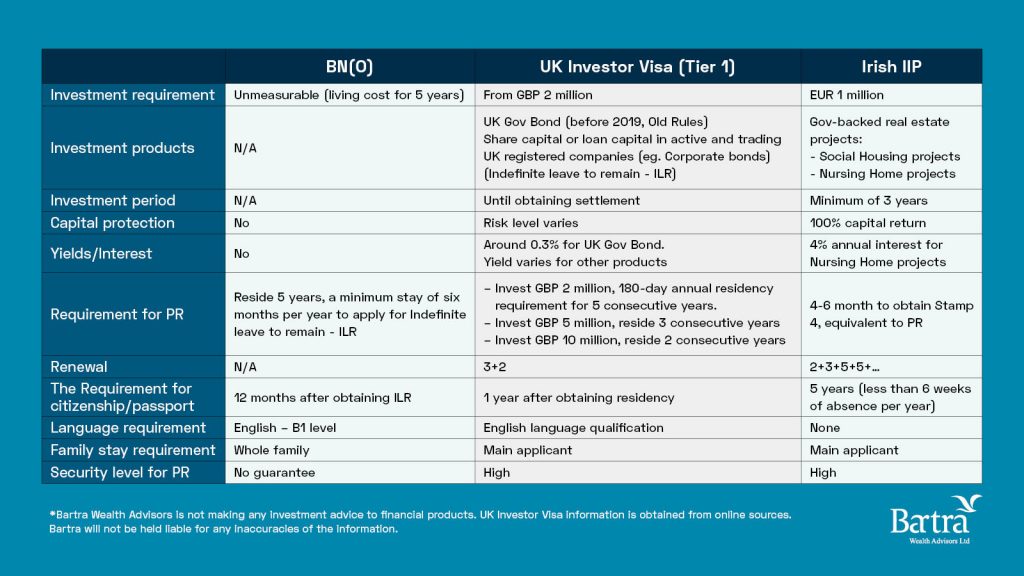
UK BN(O), UK Investor Visa and Irish IIP

UK BN(O)

For a BN(O) visa application, there is no direct cost or investment amount required. Expenses will be based on the costs of living for the whole family for at least five years. It’s important to pay attention to the restrictions of this option, as the whole family is required to reside in the UK to maintain residency. Additionally, BN(O) residents in the UK are restricted from accessing public funds. In most circumstances, BN(O) residents will not be able to enjoy social benefits, but will still be liable to taxes and national insurance. It is also worth noting that the UK is reviewing its Capital Gains Tax, which may usher in higher taxes or cut tax exemption.

UK Investor Visa

HNWIs seeking a residency visa for the UK can consider the Tier 1 Investor visa. The investment entry level is GBP 2 million, which is comparatively lower than the investment fund required by similar programmes in, for example, Australia or New Zealand.

Successful applicants will be granted a Tier 1 Investor visa initially valid for 3 years. The Tier 1 Investor visa can be extended for an additional two years as long as the main applicant does not spend more than 180 days outside the UK per year. It can also lead to UK permanent residency if the holders are able to meet the annual residency requirement for five consecutive years and maintain the investment fund.

Irish IIP

The Irish IIP is a cost-minimised immigration approach to obtain a foreign residency. It requires a EUR 1 million investment into INIS-approved projects for a minimum 3-year investment period to receive a Residence Permit (in the form of a Stamp-4 visa) upon approval. There a number of options for investment, but the Enterprise Investment route is the most popular. Bartra offers two Enterprise Investment options, Social Housing and Nursing Homes, both of which are safe and government-backed. The Social Housing scheme has a 3-year investment period with 100% repayment and no interest offered, while the Nursing Homes scheme is a 5-year investment with a 4% annual return (paid on exit), and 100% capital protection. The income from these projects is derived from a Sovereign Government, which is often described as ‘recession-proof’, even when taking into account external factors such as Brexit or global recession.

Transferability and Recognition

The Irish IIP is a straightforward immigration approach where applicants can receive permanent residency in one step, unlike for other immigration programmes where visas are initially only granted for temporary stay. The IIP has no travel restrictions to maintain residency status – just one-day residency in Ireland per calendar year is necessary. It provides flexibility and allows people to have a residency without moving, so there is no necessity to give up current jobs or businesses. This residency is later transferred to citizenship through naturalisation, which can be started at any time.

The Irish passport is the joint sixth strongest in the world, based on the number of countries its holders can visit visa-free. Its ranking is ahead of the US, the UK, Belgium, Switzerland and Norway, and it is the only passport in the world to provide both EU citizenship and the right to reside and work in the UK.

Comparatively, the BN(O) Visa offers five-year temporary residency, while a minimum stay of six months per year in the UK is required to maintain this residency status and there is no guarantee of transferability to permanent residency or citizenship at a later stage. It is also worth mentioning that the Chinese government is considering a ban on the use of the BN(O) passport as a legal travel document.

Similarly, the Tier 1 Investor visa requires that the applicant spend no more than 180 days absent from the UK in any 12 month period for 5 consecutive years in addition to the GBP 2 million investment. With an investment of GBP 10 million, two consecutive years with the same annual residency requirement are required.

The IIP investor and his/her family will be granted a Stamp 4 Visa, which is top-class immigration status. The immigrant also benefits from the added flexibility of being able to hold this status and enjoy social welfare benefits without having to reside in Ireland. Stamp 4 Visa holders’ children can enjoy free primary and secondary education and will pay the same university school fees as locals.

The BN(O) Visa is simply a means to work and reside temporarily in the UK. These immigrants have no access to social welfare benefits and its holders are often described as second-class citizens, which is an important element to bear in mind as quality of life should be a key consideration when weighing up options.

A Client Case Study

Bartra Wealth Advisors has received more than 1,600 enquiries related to immigration to Ireland in the past three months. Since August 2019, we have helped more than 50 families from Hong Kong successfully apply for Irish residency.

Family

Jeffrey Ling, Regional Manager at Bartra Wealth Advisors in Hong Kong, shared one client story. Peter and May (both pseudonyms) are married with three children attending elementary school in Hong Kong. High-income, senior professionals, the couple had purchased properties in Hong Kong for investment purposes. They were keen to send their children (or go with their children) overseas to study, with a preference for an English-speaking country. However, their biggest concern regarding immigration was that they may not be able to find a job with a similar level of income after relocation, especially considering the current challenging times. The flexibility of the IIP was attractive, as it allows them to keep their jobs in Hong Kong while also obtaining residency overseas. In addition, due to its minimal residency requirement, they are considered non-Irish tax residents residing for fewer than 183 days a year, so there is no fear of double taxation. With its stable economic environment, strong legal system, world-class education, and accessibility to both the UK and EU, the couple felt that Ireland and the IIP fit their needs perfectly. The Advisory Agreement was signed with Bartra predominantly because the Enterprise Investment option we provide offers 100% capital protection with transparent and clear investment procedures. To find out more about the IIP and the projects we offer, start by reading our article The 4 Things You Must Know About the Ireland Immigrant Investor Programme.

In a recent webinar with South China Morning Post, we compared investment and immigration opportunities in the UK and in Ireland. Guest speakers included Liam Baily, Global Head of Research at Knight Frank; James Hartshorn, CEO and Co-Founder at Bartra; and Cheryl Arcibal, business and property journalist at South China Morning Post.

We hope this article provides you with the information you need to weigh up the available options and consider what works best for you and your families in terms of cost, requirements and quality of life.

Look out for upcoming articles where we’ll be comparing the economy and property markets in the UK and Ireland. If you have any questions or would like to find out more about the IIP, feel free to contact us directly.

Impact Investing – The potential of Social Housing and Nursing Homes in Ireland

Social Housing and Nursing Home markets

Not just in Hong Kong, but everywhere else in the world, we see a high demand for and a shortage in Social Housing and Nursing Homes. This puts a lot of pressure on the government and the people, but it means there are great potentials in these projects.

Beaumont Lodge Nursing Home 5

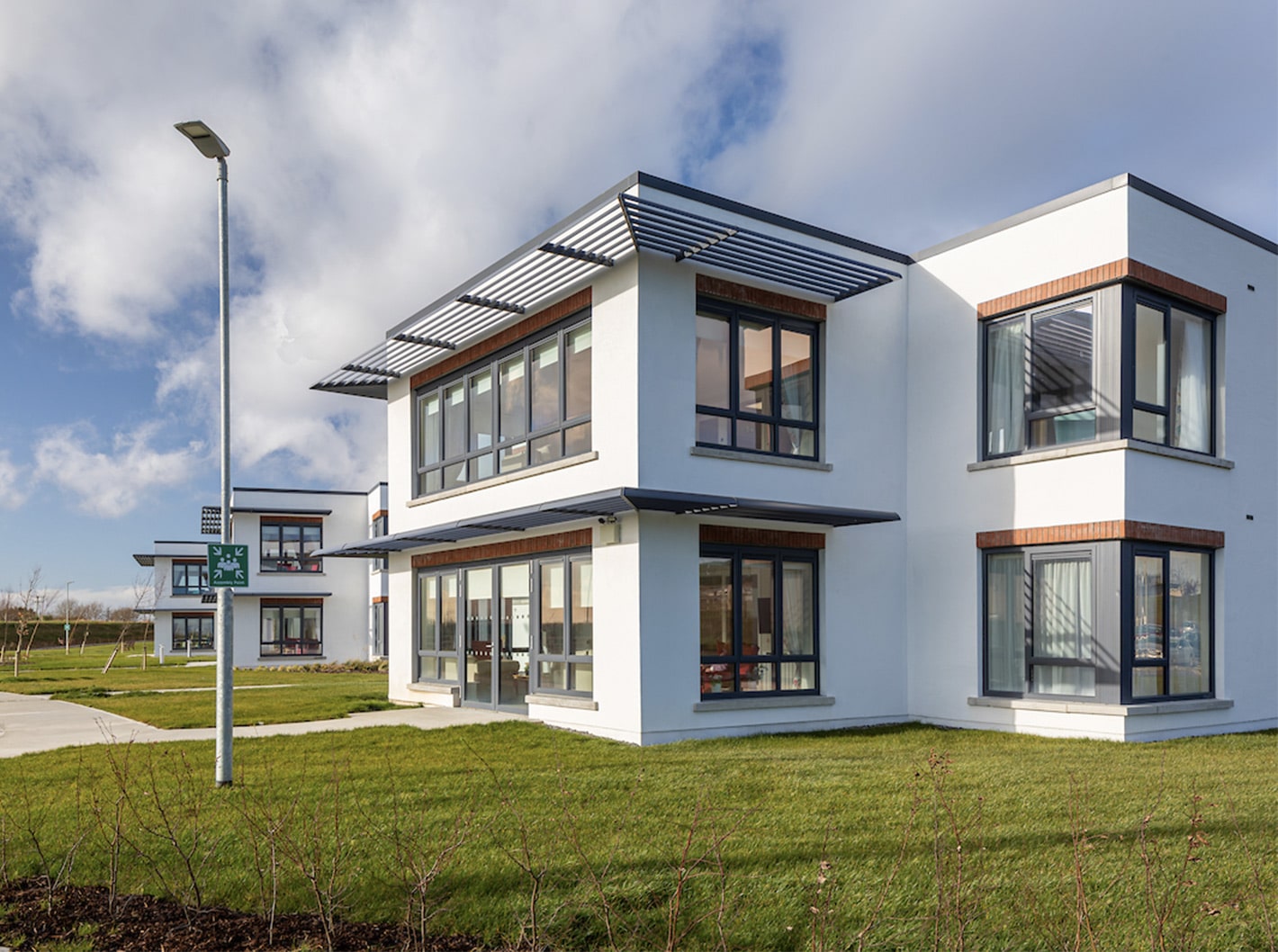
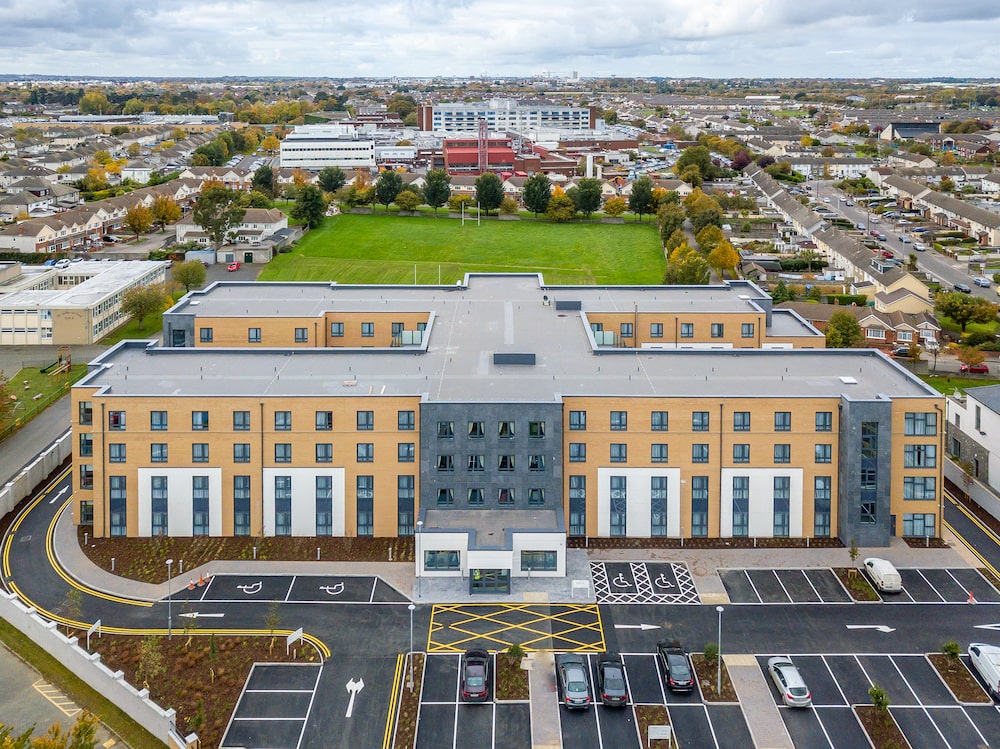
Beaumont, our biggest nursing home project to date, has just finished construction ahead of schedule and will now enter the HIQA inspection phase.

The fact is, the investment in these markets have well been the trend in Europe and the UK. This is because they receive guaranteed long-term secure income streams from a local authority or an Approved Housing Body. This makes it particularly appealing to institutional investors and pension funds, as investors get to enjoy long-term leases with little or no day-to-day management, repair, or maintenance responsibility.

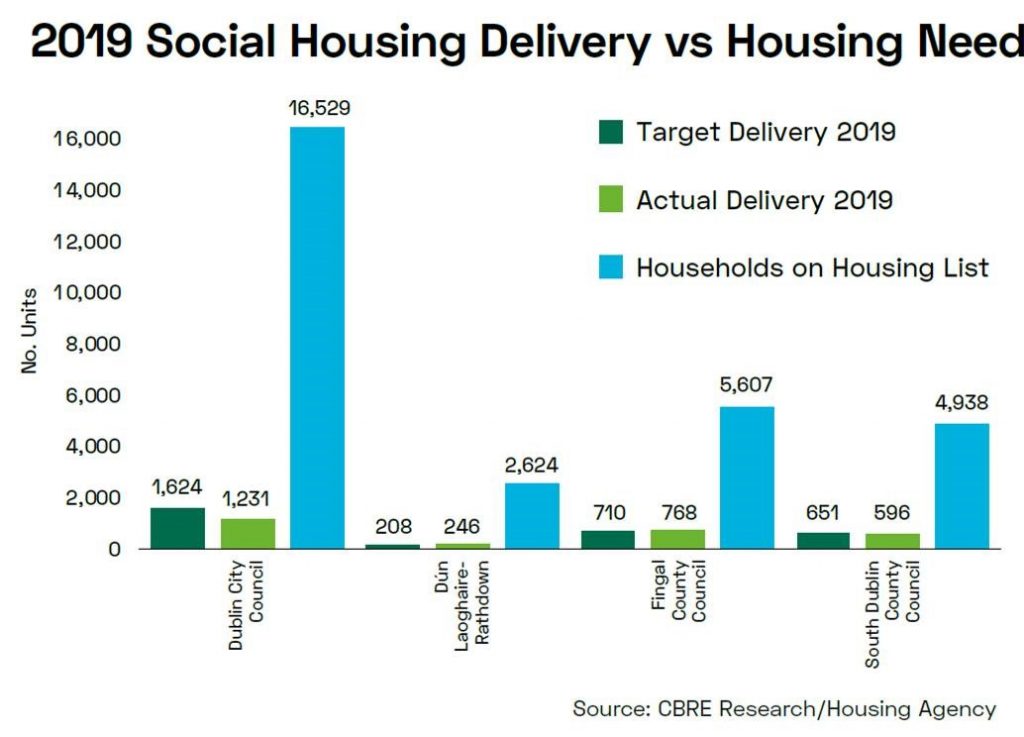
Such growth is seen in the Social Housing market in Ireland and is reflected in the CBRE Group report for the past six months. In Ireland, there are a total of 68,693 households waiting to be housed. However, no more than 15,000 are likely to be developed in 2020.

CBRE Social Housing 2019

With its ageing population, the undersupplied Nursing Homes are also seeing strong demands in Ireland. The percentage of over 65-year-olds is expected to reach 16% of the total population, accounting for 860,600 people. This means the country will need 7,500 new nursing home beds in the system by 2020. However, very little is expected to be built in the next few years, resulting in only the 1,144 beds which are currently on site.

To meet the required volume of units and to reduce the housing waiting lists, the collaboration between the public and the private sector to increase the delivery of much-needed Public Housing and Nursing homes is essential.

The role of our Irish Immigrant Investor Programme

As a developer who has successfully carried out many social housing and nursing home projects, we offer these projects as the Enterprise Investment route for families who are considering immigration to Ireland under our Irish Immigrant Investor Programme (IIP). Our extensive Irish immigration experience and expertise in the investment field, as well as our strong business network of partners, have allowed us to maintain an application approval rate of 100% and a 100% renewal rate.

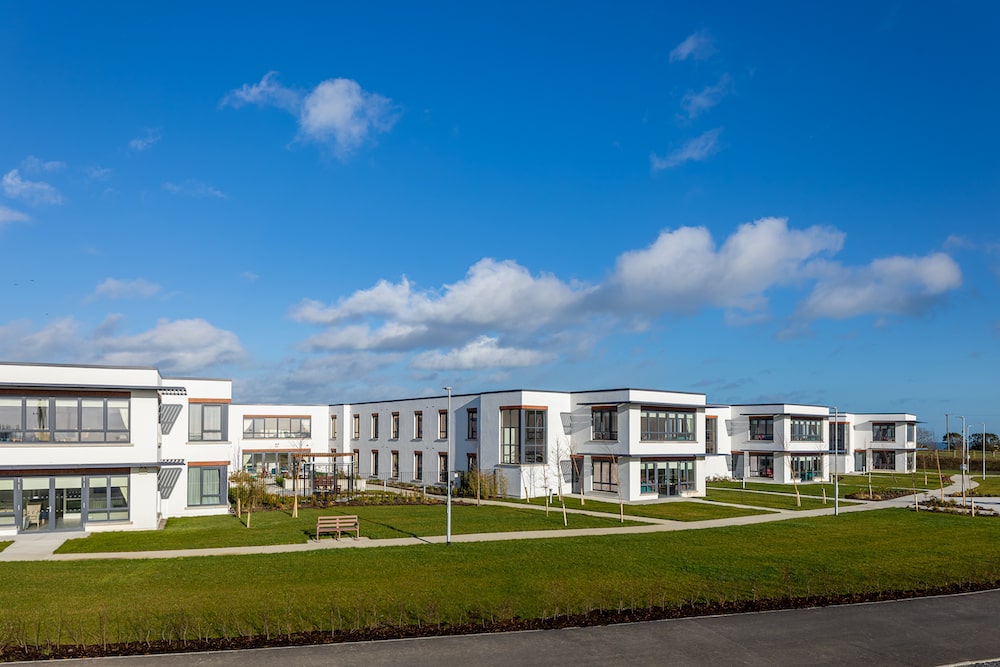
Loughshinny Nursing Home

Applying for Irish residency via IIP is very straightforward, with short processing times and no quotas. Investment in Nursing Homes, in particular, offers Hong Kong investors capital protection with a potential profitable return. We offer a five-year term with a 4% annual return for Nursing Home investments. More importantly, we offer end-to-end services, so you can be sure that your investment and your family’s future is in safe hands all the way through the process.

Why Bartra?

We at Bartra only market investments where we have already purchased the site. All of our projects are located in Dublin, the area of highest investor demand, and long term value. We only use high-quality design team members including architects, planners, quantity surveyors, and construction companies. All our projects are fully cost by independent third parties prior to being marketed to IIP applicants. The investments are structured so that there is a clear alignment of interest between investors and Bartra, that the projects are only profitable for Bartra if they are first sold and investors are repaid.

Bartra Group already has a pipeline of 435 Social Homes with a value in excess of €130 million at the moment. We are planning to construct more than 1200 homes in the next 5 years. Our Social Housing project at Poplar Row has just signed a 25-year Enhanced Lease with the government. At a 0.14 hectare size with 39 apartments, the construction started in June 2020 and is progressing on time. Our other Social Housing projects are also debt funded by various companies. Bartra Group also has a pipeline of 823 Nursing Home beds and plans to run over 1,000 beds in the next 5 years. One of our projects, the Loughshinny Nursing Home Development, has been completed and was opened in summer 2019 with residents moving in. It has also shown full compliance across all areas in the HIQA report, which is hard to achieve. Also, our Northwood project has officially opened in late May this year, with occupants moved in.

Fast becoming one of the largest providers of Social Housing and Nursing Homes in Ireland, our available IIP project slots are filling up quickly. Speak with one of our expert advisors to find out more about Bartra Wealth Advisors and our projects by completing the form below, and see how you can be a part of our projects.


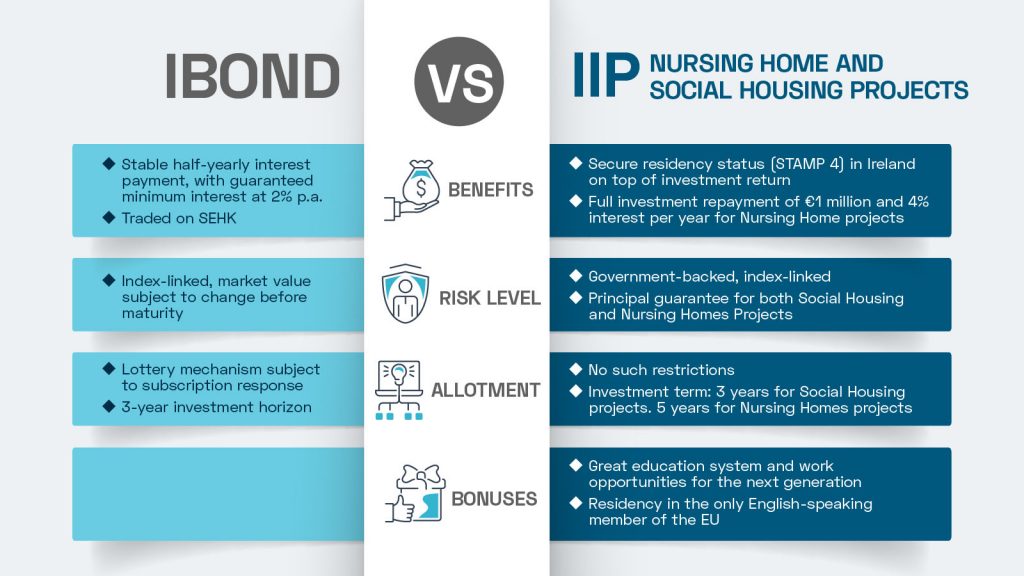
The safest investment – Hong Kong iBond 2020 vs The Immigrant Investor Programme

The announcement of the latest iBond, which is the seventh series issued since 2011, is open for subscription at 9 am on October 23, 2020. The three-year-long, HK$10 billion worth bonds promises to provide a steady source of income for everyday investors, but there are always alternatives among the safe investments. We know an investment option that offers not only an almost guaranteed rate of return but also a world-class permanent residency.

What are we talking about?

In short, the iBond is an inflation-linked retail bond released by the HKSAR Government under the retail bond issuance programme of the Government Bond Programme. Offered at a minimum denomination of HK$10,000, the HKSAR Government will repay 100% of the principal amount at maturity, along with generating half-yearly interest payments which are based on the Composite Consumer Price Index. The guaranteed minimum payment is at 2%.

If you are investing based on the appeal of a safe and regular return, investing in iBond is sensible. However, if you are aiming for more, the Immigrant Investor Programme (IIP) can be a promising alternative.

The Immigrant Investor Programme (IIP) offers the applicant a secure residency status in Ireland through an approved investment. Depending on the choice of project, whereby we offer government-backed Nursing Home and Social Housing projects under the Enterprise Investment route, the applicant will receive their full investment of €1 million and 4% interest per year if they were to choose to invest in our Nursing Home projects. This means, at the maturity of the five-year investment period, the applicant will get an extra €200,000 tax-free, on top of their €1 million investment, as well as a STAMP 4 identity in Ireland.

Nursing Home and Social Housing

How do you invest in them?

The iBond subscription period will start from 9 am October 23 to 2 pm, November 5. Applications can be done via placing banks, securities brokers, or the Hong Kong Securities Clearing Company Limited. If the total application amount is under HK$15 billion, all eligible applicants will be satisfied. However, if the total application amount is over HK$15 billion, the iBond will be allotted by lottery, where each chosen applicant only gets one hand of bonds. The iBond will then be issued on November 16 and be listed on the Stock Exchange of Hong Kong on November 17. The trading of it in secondary markets can happen after.

On the other hand, the IIP is open for application at any time of the year and the process is very simple.

There are just four key steps to the IIP process:

  • Application
  • Approval
  • Investment
  • Receive residency

What is particularly attractive about this programme is that the investment is placed after receiving the approval letter. Not to mention, both of the assets of Social Housing and Nursing Home projects derive their income directly from the Irish State, making it a very safe investment for our investors.

Why should you care?

Both the iBond and the IIP are stable investments that offer promising investment returns. But as the intention to immigrate has spiked in recent years, being able to obtain a residency on top of an investment can be very appealing.

Dublin

Ireland is an emerging emigrant destination for Hong Kong people. As the only English-speaking member of the European Union, Ireland is a gateway to both the UK and European countries, offering a great education system and enjoys one of the lowest corporate tax rates in Europe, increasing its appeal as a regional business hub for multinational corporations.

The time for getting approval for the IIP is only 4-6 months. There are no language requirements and the residency requirement is just one day per year, meaning that the applicant can obtain residency without moving. 

The choice is yours

iBongHK and IIP Eng_Text enlarged

Of course, you should assess all the aspects of every investment you make, and there will definitely be variables that may change your mind. For example, the biggest barrier to the IIP is that the applicant is required to have €2 million net wealth. While we are able to offer investors a 4% annual investment return on their €1 million investment for 5 years, the iBond has historically exceeded the 2% minimum return, where their highest interest rate offered was 6.08% in 2011.

This is why we’re here. To find out more about IIP, how it works, what the benefits are, and how you can apply, speak with one of our expert advisors! Or simply complete the form below to download your IIP brochure.

Living in Ireland – Weekend Destinations

Nobody likes a crowded weekend. 

Endless line ups, packed streets, sweaty passerby… all the things we have accepted as normal in Hong Kong doesn’t even exist in certain cities around the world. 

Ireland weekend

With no weather extremes and the lowest temperature at just 4 to 7 °C, the friendly climate is only one of the many great things you can expect when living in Ireland. Instead of diving into the tourist aspect of the country, let us look into the regular weekend life in a city like Dublin. 


Time to visit the Grocery Store

While delivery services of groceries, provided by companies such as HKTV Mall in Hong Kong have boomed in recent years, similar services have been enjoyed by Irish residents for quite some time. Chinese markets in Dublin also offer the service, such as the Asia Market. Known as “Ireland’s Premier Supermarket Since 1981”, they are the country’s largest Asia food importer, and a retailer that sells products ranging from condiments to fresh vegetables. With three branches across the areas of Dublin 2 and Dublin 12, you will immediately recognize it by its big, yellow door. Another great market is the Oriental Emporium, which sells classic Chinese ingredients, as well as ingredients from other countries (they have a Mexican corner too, so if you are into exotic food, this is where you need to visit!). Not to mention, their rich selection of sauces can ensure you in finding your favorite teriyaki sauce. 

If you are a frequent shopper at the cooked food section, visit the Han Sung Korean & Japanese Market on 22 Great Strand Street, where they serve homey Chinese stir fry, 2-dish or 3-dish rice, and other Asian delights such as bibimbap and gyoza.

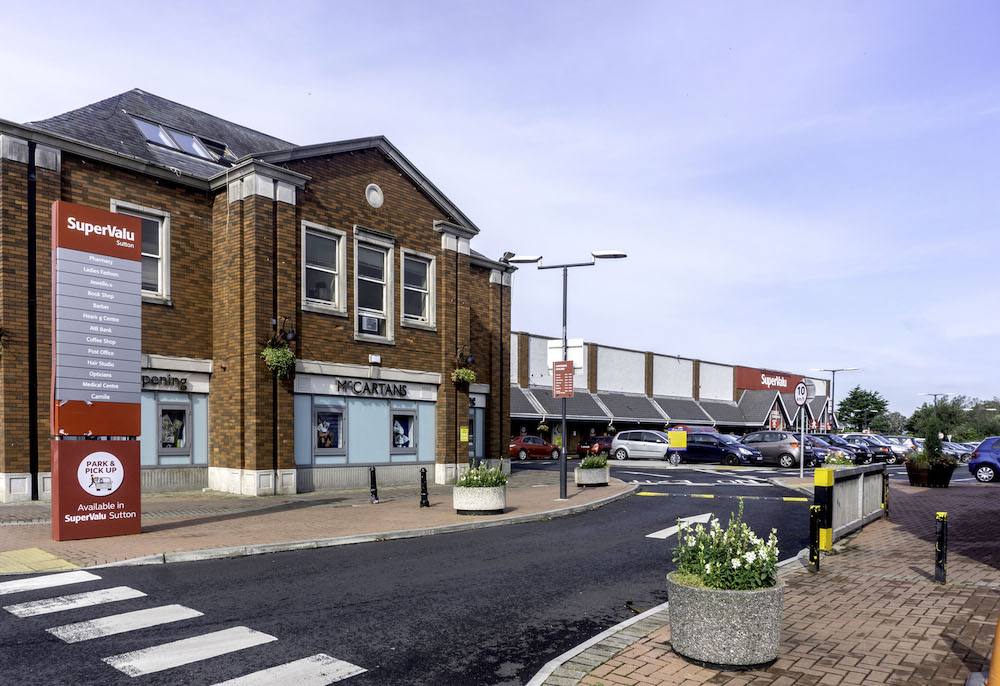
Of course, there are also the big local chains, including SuperValu (just like any of our major supermarket chains in Hong Kong) and Dunnes Store (similar to Marks and Spencer in Hong Kong). Just like Hong Kong, remember to bring your own bag!


3:15 Tea Time

People using chopsticks and having Hong Kong dimsum in restaurant

Living in Dublin does not mean you have to forfeit your favorite time at the local cha chaan tengs. Hong Kong-born chef Kwanghi Chan opened the perfect place for your noodle, rice, or even bao craving. Located right in the heart of Dublin, the restaurant, Bowls by Kwanghi Chan, has earned the name of Ireland’s 100 Best Restaurant 2019 from McKennas’ Guide by The Sunday Times.

How about some siu mai and har gow? There is Yang’s Chinese Restaurant who serves lunch until 5 pm on Sundays, perfect for the night owls who prefer to have a late munch on their day off. Winner of The Irish Asian Food Awards 2019, I doubt we have to explain much about the quality of their food.


Spots for the Shopaholic

Ireland weekend

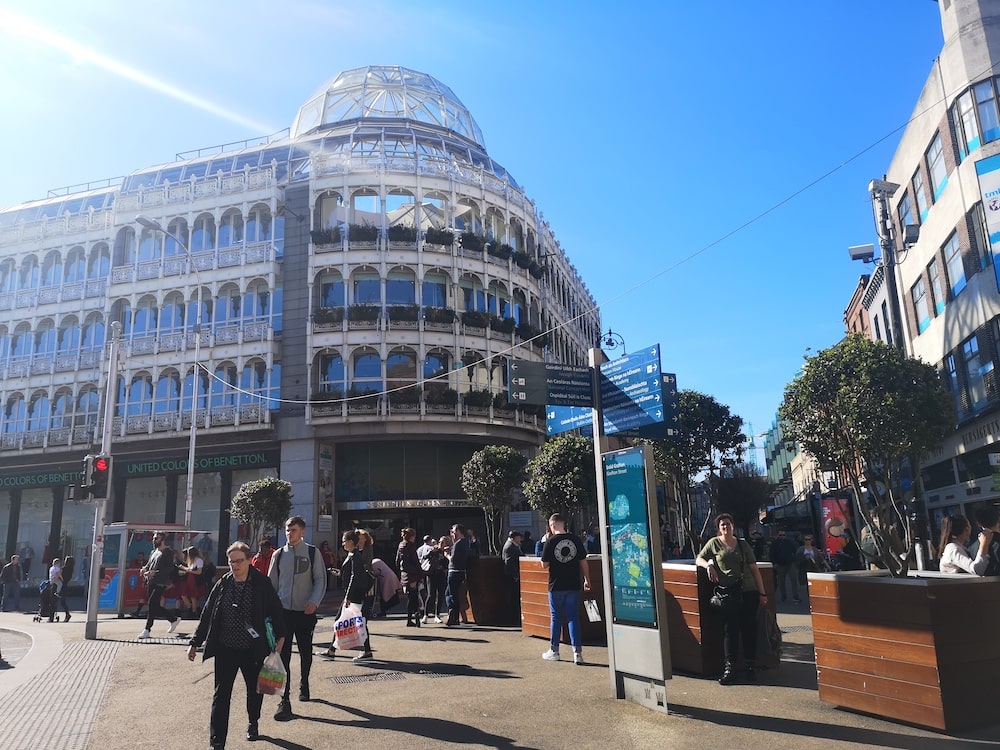
Get some fresh air and shop at one of Dublin’s principal shopping streets – Henry Street. With shops including Clarks, Boots, Pull and Bear, Lush, and even a Three store (yes, the mobile and network store we have here in Hong Kong), the street is perfect for the family. This is also where Christmas lights and Halloween parades are held.

Across River Liffey is the other principal shopping street – Grafton Street. Here, you have brands like Victoria Secret, Pandora, Levi’s, Ted Baker, and more. Looking for designer brands? The Brown Thomas Dublin department store is located right on the same street. This chain flagship store at 130,000-square-foot sells both prêt-à-porter and haute couture clothing and accessories.  

Ireland weekend

Consider Arnotts, Jervis shopping center, Dundrum shopping center, Liffey Valley Shopping Centre, and Blanchardstown Shopping Centre if you prefer indoor malls. All of these places are great to spend a relaxing afternoon in, similar to malls like Festival Walk and Elements in Hong Kong. How can we miss the outlets? There is the Kildare Outlet Village 45 minutes away from Dublin, which is a great day-trip option for you and your loved ones.


Trek and Hike

Ireland weekend

A lot of Hong Kong people deliberately fly to Nara to see the wild deers. In Dublin, you are just a short drive away! Interact with the wild deers at Phoenix Park and bring your pet along to enjoy the large green field. There is also the Malahide Castle & Gardens with a playground and a Fairy Trail for kids, just 30 minutes from Dublin. If you are a hiker, then the 3-hour walk up Killiney hill park is great. It is not a very difficult trail, and the ocean scene on the top is golden. There is also the Wicklow Mountains National Park, a recreation and biodiversity conservation site with a campsite.

Ireland weekend

The list of natural scenery in Ireland is endless, so there are countless explorations to go on. 


Kids Activities

couple at the National Museum of Ireland, Dublin

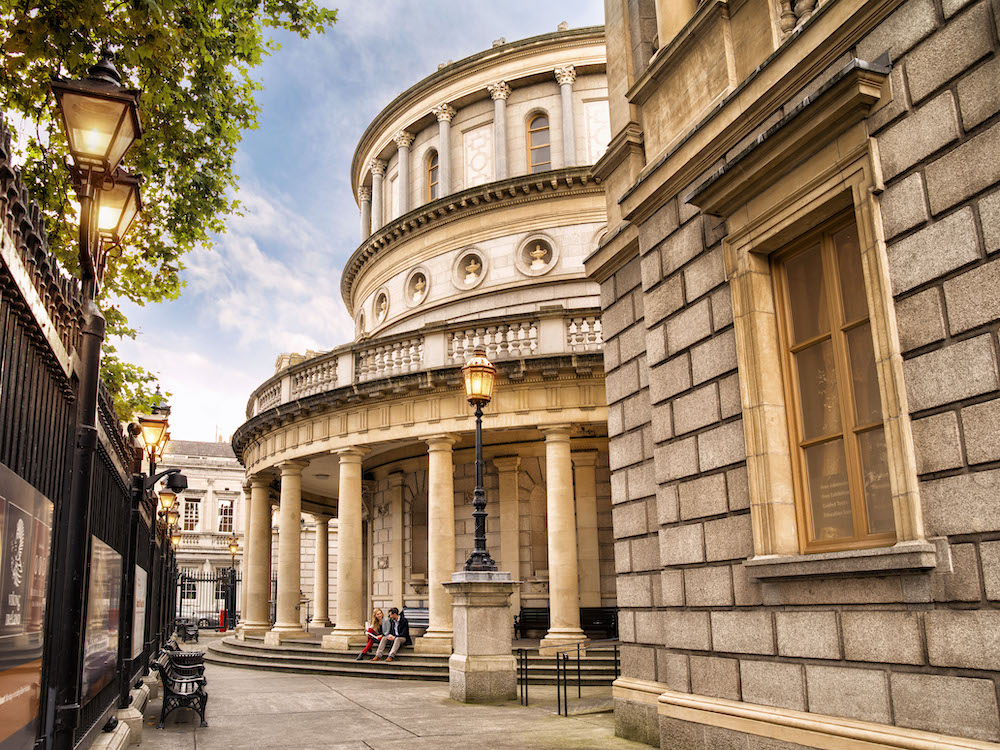
Learn about the country with your kids on the weekends. Housing a range of 14th to 20th-century European art, the National Gallery of Ireland regularly hosts different children-friendly activities and workshops. For small children under the age of 9, Imaginosity, Dublin Children‘s Museum is definitely the place to be. Encouraging discovery and a ‘hands-on, minds-on’ philosophy, the place offers party rentals as well, so you and your family can celebrate birthdays and other special occasions there. For older children, there is a lot to learn at the EPIC The Irish Emigration Museum. This place is uniquely dedicated to the stories of “Irish emigrants who became scientists, politicians, poets, artists and even outlaws all over the world”. 

Of course, due to COVID-19 restrictions, the hours of these institutes are affected. Do visit their websites first to make sure they are opened!

Ireland weekend

Ireland may not be the first country that comes to mind, but there are countless worthwhile explorations to be made there. Learn more about the opportunities this 5th wealthiest country in the world offers, and speak to one of our expert advisors to find out more about Bartra Wealth Advisors and the Irish Immigrant Investment Programme by completing the form below!


Ireland: an appealing destination for immigration

Europe’s rising star

An unprecedented level of global uncertainty means choosing a destination to immigrate to is not an easy proposition. With its strong economy and enviable education system, Ireland is a strong contender.

Bringing Covid-19 under control

While other countries continue to struggle to control cases of Covid-19 and its wider effects on the economy and society, Ireland has long since flattened the curve. As early as April, Ireland’s Chief Medical Officer reported that each infected person was infecting less than one other person and that no further peak was expected – which he attributed to measures implemented by the government and ‘hard work in communities.’

Growing economy, growing opportunities

Before the pandemic, Ireland’s economy was booming, with more than 400,000 jobs created in the six-years up to 2020. And despite being projected to contract by 8.5% this year as a result of Covid, it is predicted to then grow back 6.25% by 2021. This makes it a prime place for both job seekers and investors during the post-lockdown recovery phase, and a great place for setting up new enterprises.

Nursing homes: a chance to invest and help society

Hong Kong citizens can benefit from a unique route towards Irish residency via the Immigrant Investor Programme (IIP), which allows high-net-worth individuals to gain residency within 4-6 months by investing in nursing homes and other social infrastructure. In recent years Ireland has suffered a shortage in suitable residential facilities for the elderly, and as Covid-19 has shown, well-equipped facilities and skilled staff are essential.

Investment in nursing homes has been growing in recent years, with an increase in institutional investors providing the capacity to build larger facilities. This is seen in the fact that in 2019 there were 3,000 more beds available than ten years previously, while the actual number of nursing homes had shrunk by 18 percent in the same period. One of the main reasons for increasing investment is the stability that it provides over the long term to investors.

Bartra has already run many successful nursing home investment projects and is currently offering Hong Kong investors the opportunity to achieve Irish residency and help boost the care of the nation’s elderly.

Bartra Wealth Advisors provide end-to-end services to guide you through every aspect of immigrating to and investing in Ireland.